Café Achteck
The pissappropriation of Berlin’s public toilets
Once upon a time there were 159 cast-iron public pissoirs offering relief to bloated Berliner bladders (mostly men’s) across the city.
These included 104 of the seven-stall urinals that came to be lovingly known as Café Achteck for their octagonal shape, according to the administrative report of the Municipal Building Authority for 1897/1898.
There were also 49 two-stall pissoirs, three ten-stall, and one each of six-stall, eight-stall and eleven-stall variants at the time, the report said. The ten and eleven-stall pissoirs were built of cast iron plates, similar in style to Café Achteck, but in a rectangular form.
You might think Berlin stinks to high heaven now, but imagine what it was like at the beginning of the 19th century! Chamber pots were emptied into the gutters, there was business of all types being conducted on the streets, and streams, rivers, and drinking water were contaminated.
Berlin’s magistrate and the police started bickering over the establishment of public urination facilities from about 1838. By royal decree (1832) the police were responsible for everything on and under the city’s main streets, but structural measures were under the magistrate’s jurisdiction, and Berlin was broke. Plus ça change.
It wasn’t until 1862 that the magistrate and treasury agreed to split costs for 15 public conveniences each. The first two were built in 1863 at Askanischer Platz (two-stall) and Fischerbrücke (one-stall), and six more followed around the city the same year.
Berliner Schnauze (the city’s infamous quick wit) quickly found a nickname for the toilet’s oval design – the Madai Temple, named after police chief Guido von Madai (1810-1892).
There were 56 Madai Temples by 1876, all but the one at Fischerbrücke being two-stall variants. They were proving too small for the public’s urgent needs however. So city planning officer Carl Theodor Rospatt (1831–1901), who was also responsible for civil engineering, developed an efficient standardized design in 1878 – and thus Café Achteck was born!
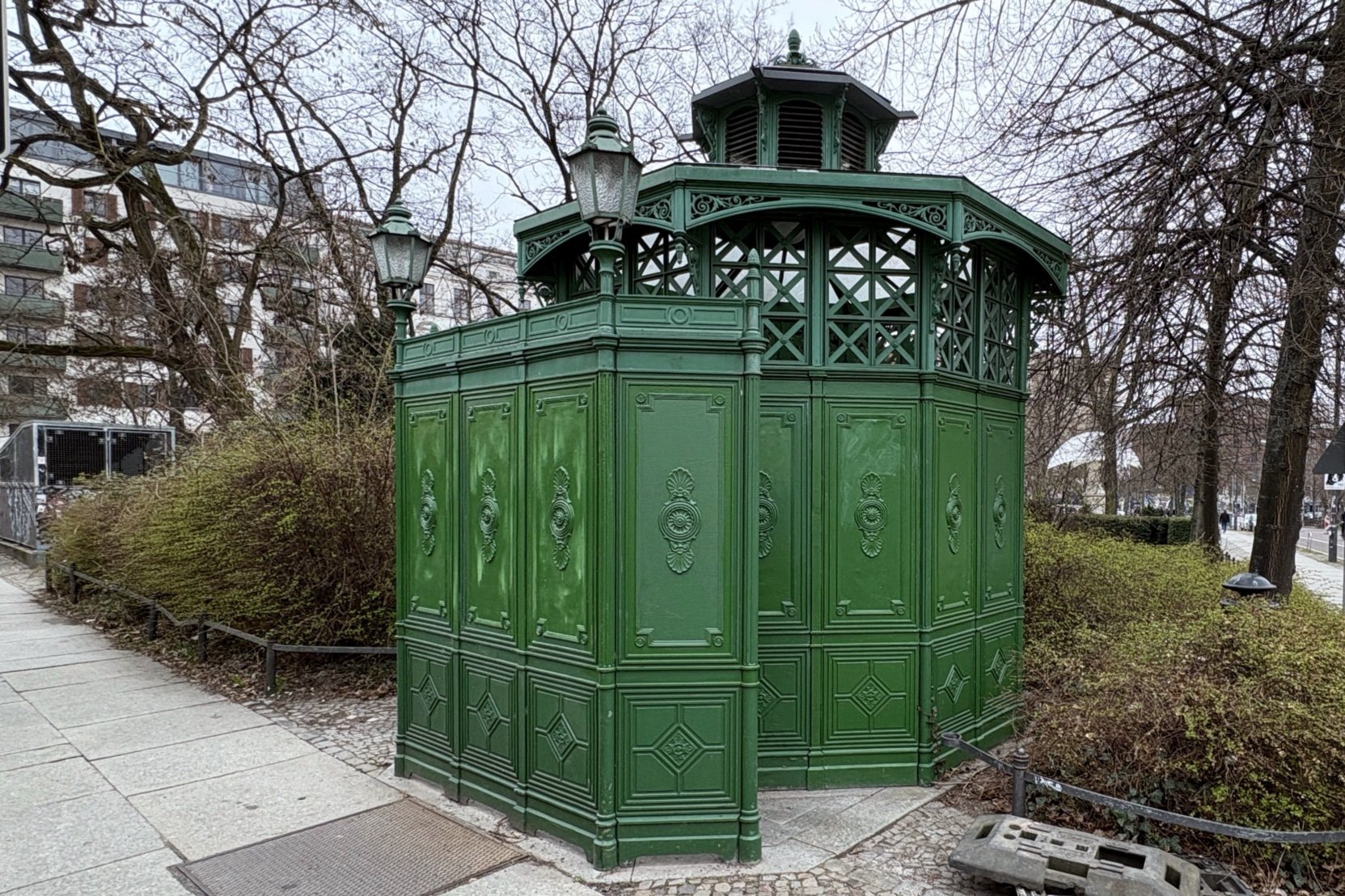
Café Achteck at Senefelder Platz.
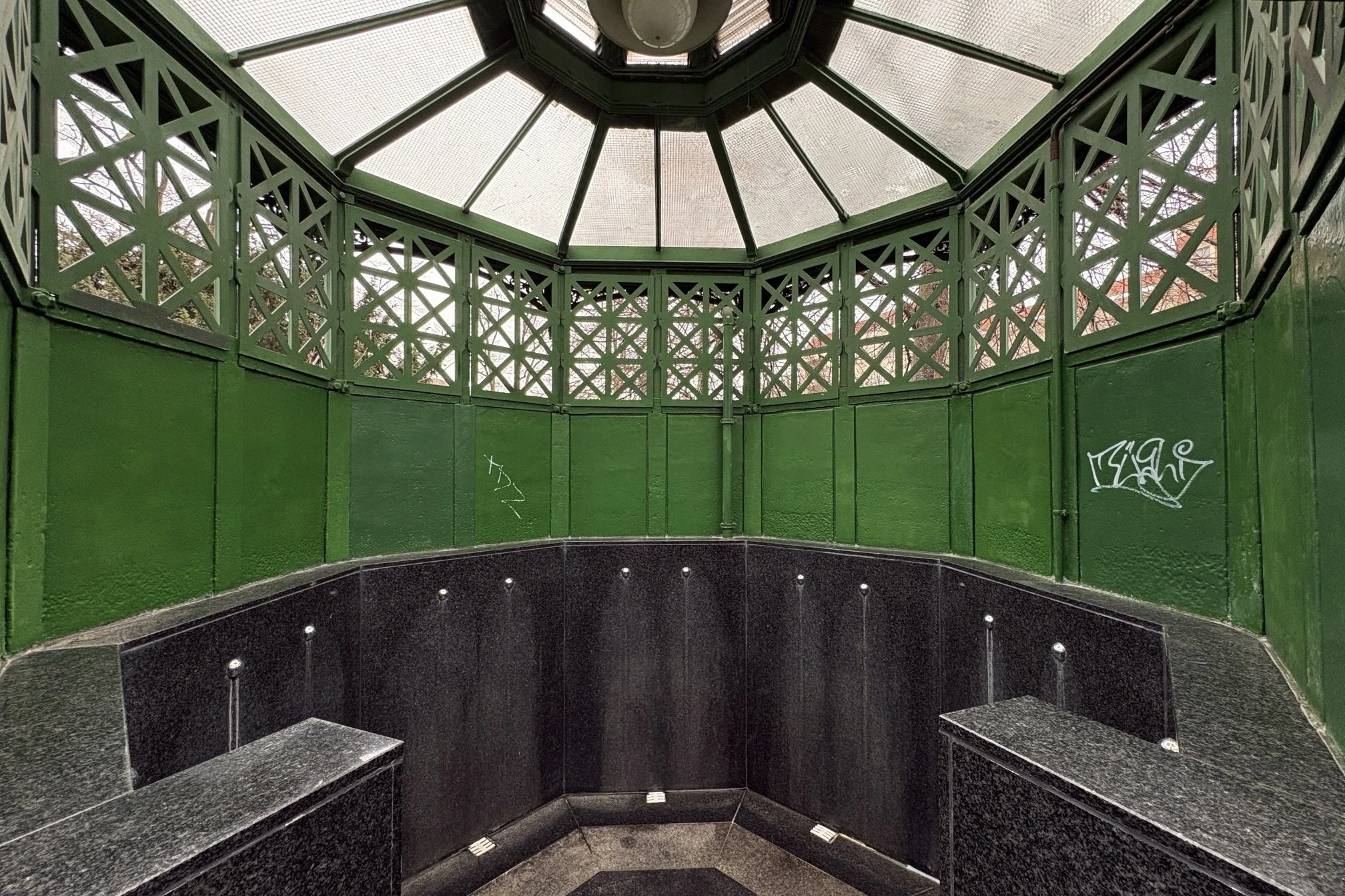
It had seven cast-iron wall segments with ornamental decorations, a screen in front to provide some semblance of privacy for the users, and a small octagonal vent crowned the roof, with two gas lanterns atop the screen for nighttime use.
There was no provision for women to pee, or indeed for men or women’s number twos, but neither the police nor the city authorities gave a crap.
The modular construction allowed the units to be dismantled or relocated as needed, and the first Café Achtecks were installed in 1879 at Weddingplatz and Arminiusplatz.
The official name for the green-painted pissoirs was Waidmannslust (hunter’s delight), presumably because of their color or the delight felt by relieved bladders after use.
Of course, the war took its toll on Berlin’s public toilets as well as everything else. By 1949, when someone got around to counting them, there were 108 public toilets and 72 pissoirs in operation, with ten out of service. The West Berlin city council reported 57 toilets and 46 pissoirs were destroyed in the war.
The survivors vanished over the years. Nobody cared for them and many were just thoughtlessly demolished and scrapped.
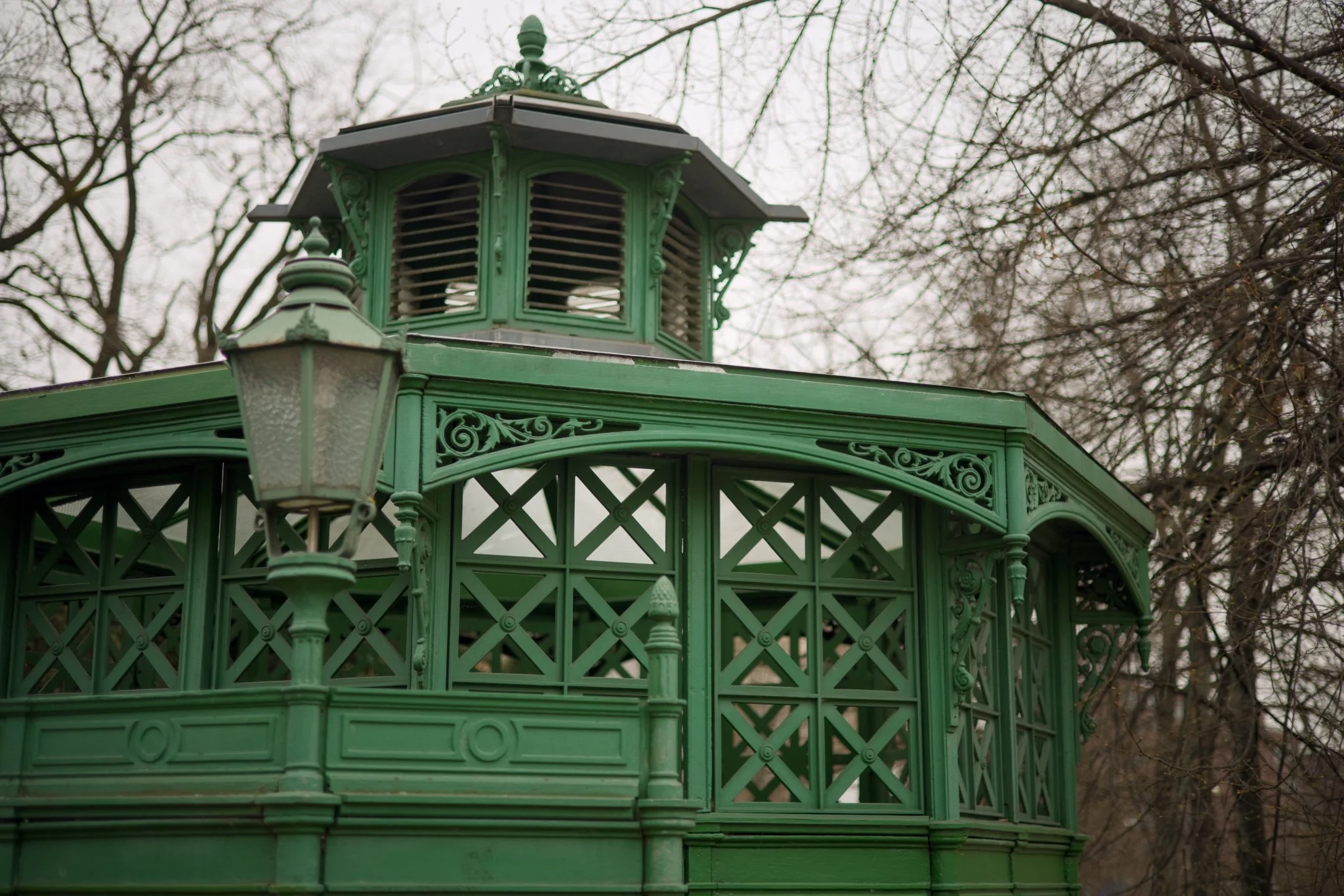
It wasn’t until German reunification in 1990 that the Landesdenkmalamt took an interest and declared Denkmalschutz for some of the better-preserved examples.
Berliner Hans Wall, the founder of the street furniture and advertising company Wall AG, took up the cause in 1995 and funded a lavish modernization of a Café Achteck at Chamissoplatz in Kreuzberg. A modern restroom for both men and women was installed in the historically preserved shell.
Wall’s company worked to restore and modernize other Café Achtecks around the city, but Wall died in 2019 and his company was bought by a French consortium that obviously doesn’t have the same attachment to Berliner toilets.
Only a dozen or so Café Achtecks remain, along with three of the larger rectangular cast-iron urinals. You can get burgers in one of those under the railway tracks at Schlesisches Tor – just don’t ask to use the toilet as there’s none.
📍 Arkonaplatz, Boxhagener Platz, Schlesisches Tor (Burgermeister), U-Bhf Alt-Tegel, Fellbacher Platz, Pekinger Platz, Stephanplatz, Unionplatz, Huttenstr., Gendarmenmarkt, Chamissoplatz, Leuthener Platz, Rüdesheimer Platz, Karl-Marx-Str., Senefelder Platz, Alt-Mariendorf.
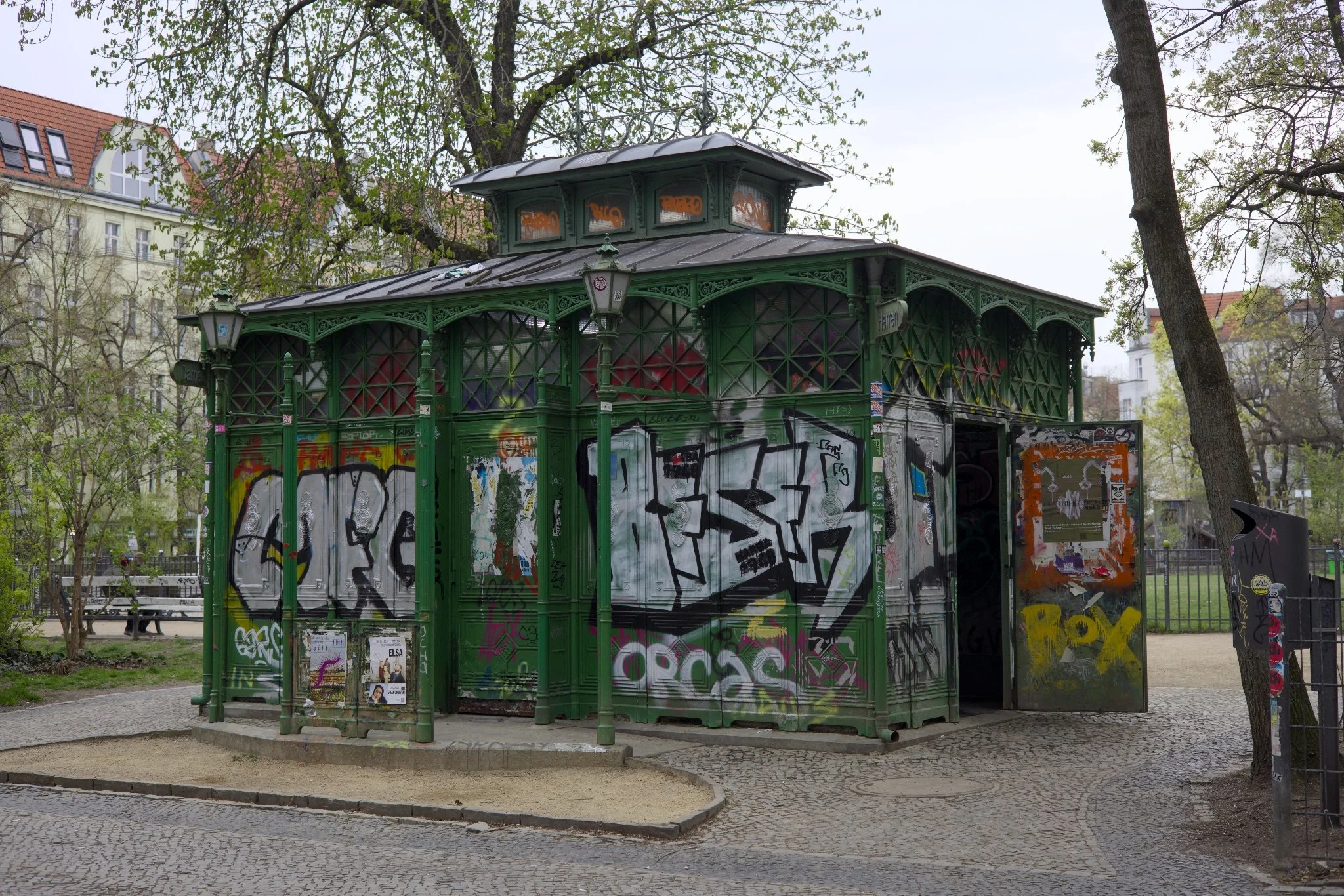
Public toilet at Boxhagener Platz.