Flakturm Humboldthain
Shooting bombs FROM the sky
As the air-raid sirens blared with increasing frequency from 1940 on, they were called “Hermann Meier’s Hunting Horns” by the long-suffering Berliners.
The ironic joke referred to Hermann Göring’s mis-reported boast that he should be called “Meier” if even a single bomb ever fell on Berlin. Göring was also the Third Reich’s patron of the hunt (Schirmherr der Jagd.)
Well, Berlin was bombed – for the first time by British bombers on the night of August 26, 1940 – and it helped prompt a Führer’s order for the construction of flak towers (anti-aircraft towers) across the city. Of the four projected high-rise bunkers with flak platforms, three made it to being, in the west, east and north.
The western Flakturm I ("Gustav") at the Berlin Zoo was demolished by British forces in 1947 after three attempts. Today, its debris forms an island in the Neuer See in Tiergarten.
The eastern Flakturm II in Friedrichshain was partially demolished by the Red Army in May 1946. Remains of the observation platform can still be found today on the Großer Bunkerberg in Volkspark Friedrichshain.
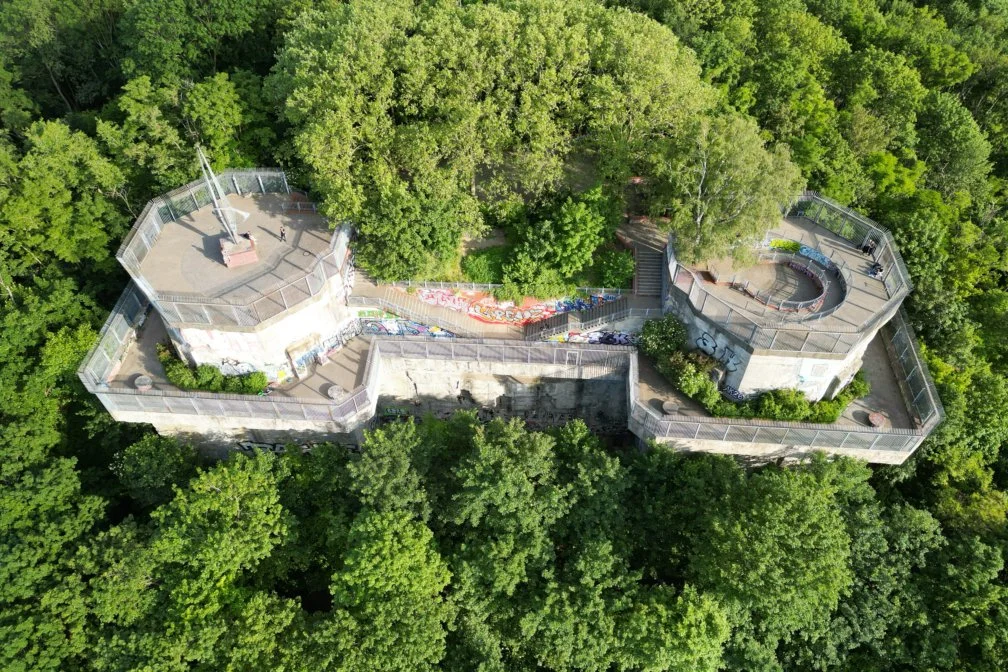
The northern Flakturm III was built between October 1941 and April 1942 in Volkspark Humboldthain with the use of forced labor.
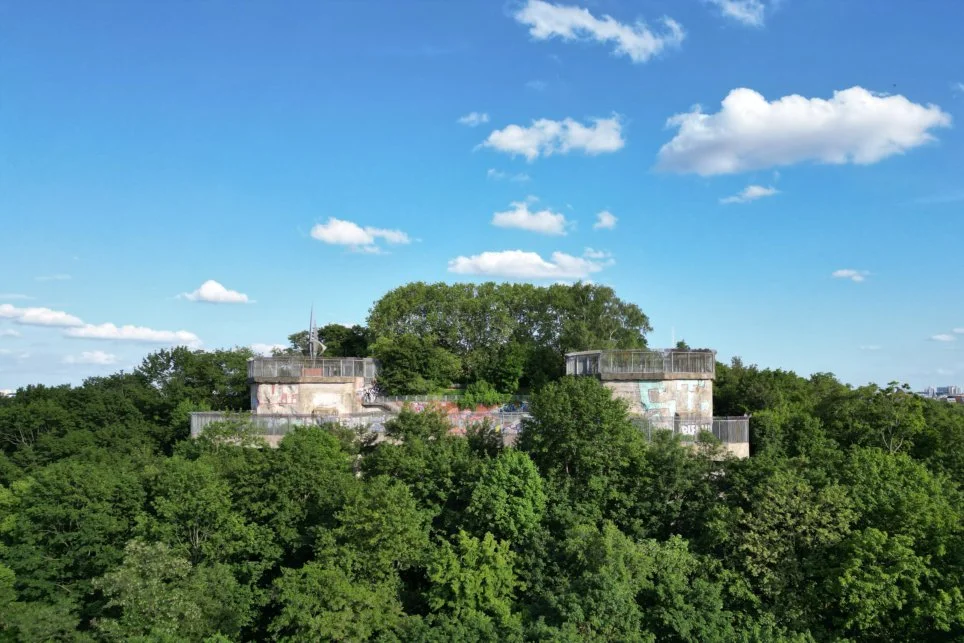
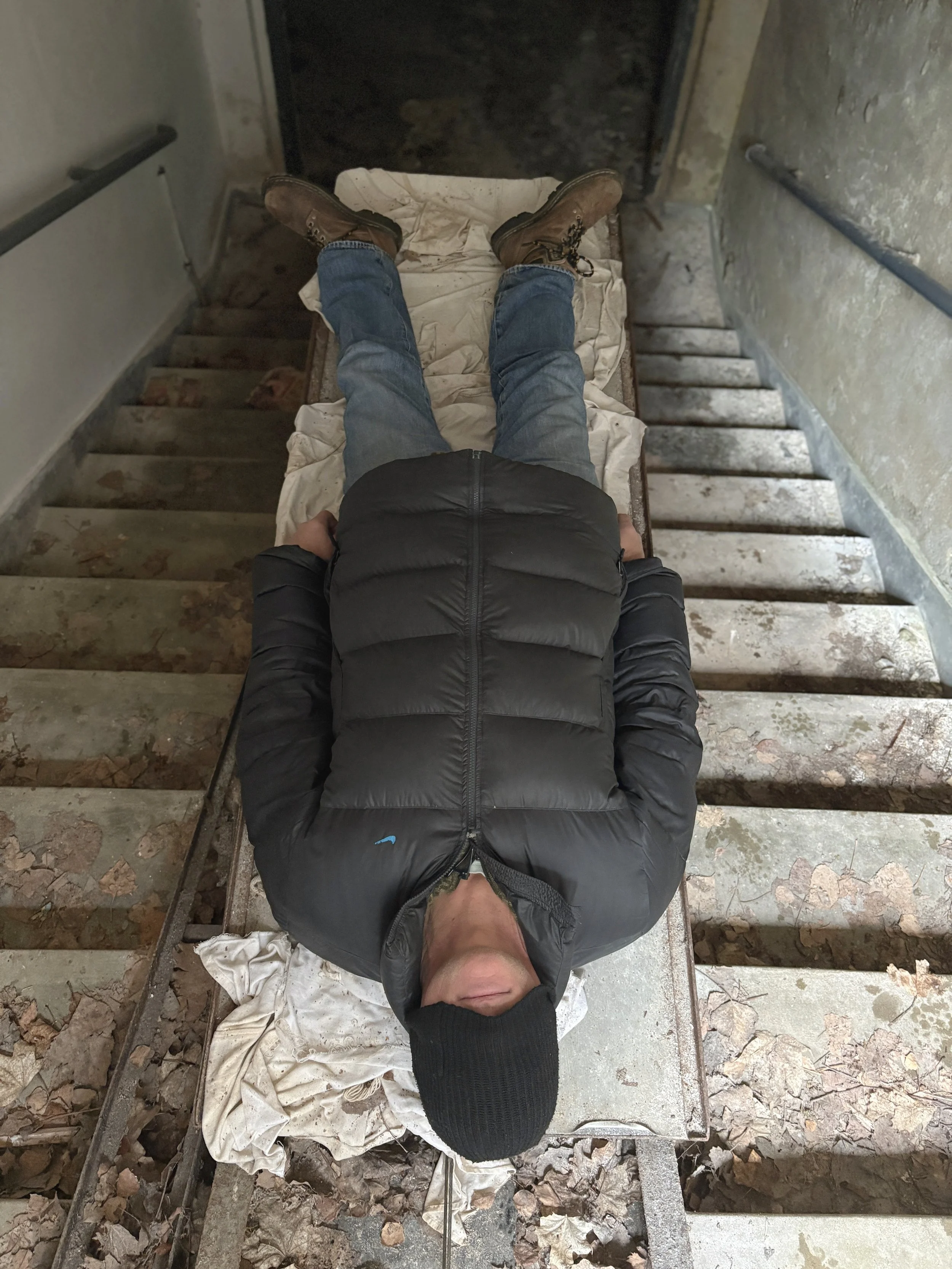
The French made several attempts to blow it up by May 1948, resulting only in the partial destruction of the southern half. Blowing up the northern part was tricky because of its proximity to the S-Bahn ring tracks.
Consequently, the tower was buried under 1.3 million cubic meters of rubble and integrated into the redesign of Volkspark Humboldthain between 1948 and 1951. To this day, the top of the former Flakturm remains the highest point in the Wedding district.
Until 1990, the bunker itself was a “lost place” full of holes and crevices that allowed access to the ruinous interior. Despite the dangers, it must have been a magical place for children and curious adults to explore. But there were accidents, including a fatal one in 1982 that prompted discussions on whether to destroy it altogether or make it more secure.
It took a few years for the idea of demolition to be rejected for cost reasons. Work on making it safer began in 1988, closing openings, repairing stairs, and erecting a three-meter-high fence around the upper gun platform to stop people plunging to their deaths below. It was ceremoniously reopened as “Humboldthöhe” (Humboldt Heights) in July 1990.
The name had been chosen in 1952 when Otto Lengner’s suggestion beat off competition from hundreds of other entries including the likes of “Plumpenpickel” (Plump Pimple) and “Großer Busen” (Big Boobs).
The Berliner Unterwelten association got special usage rights and began clearing the rubble from inside the Flakturm in the 2000s. They started offering tours in April 2004, initially only of the top two floors of the seven-floor structure.
Tours only run from April to October, as the bunker serves as a winter sanctuary for bats that must not be disturbed during hibernation.
Berliner Unterwelten also had a “Humboldthain Extrem” special tour taking you down 70 meters but they’ve had to cancel it “due to structural stabilization measures” for the time being.
Since 1989, the German Alpine Club has used the rugged concrete walls and the overhang beneath the flak platform as a climbing wall, making it one of the largest concrete sport-climbing facilities in Germany.
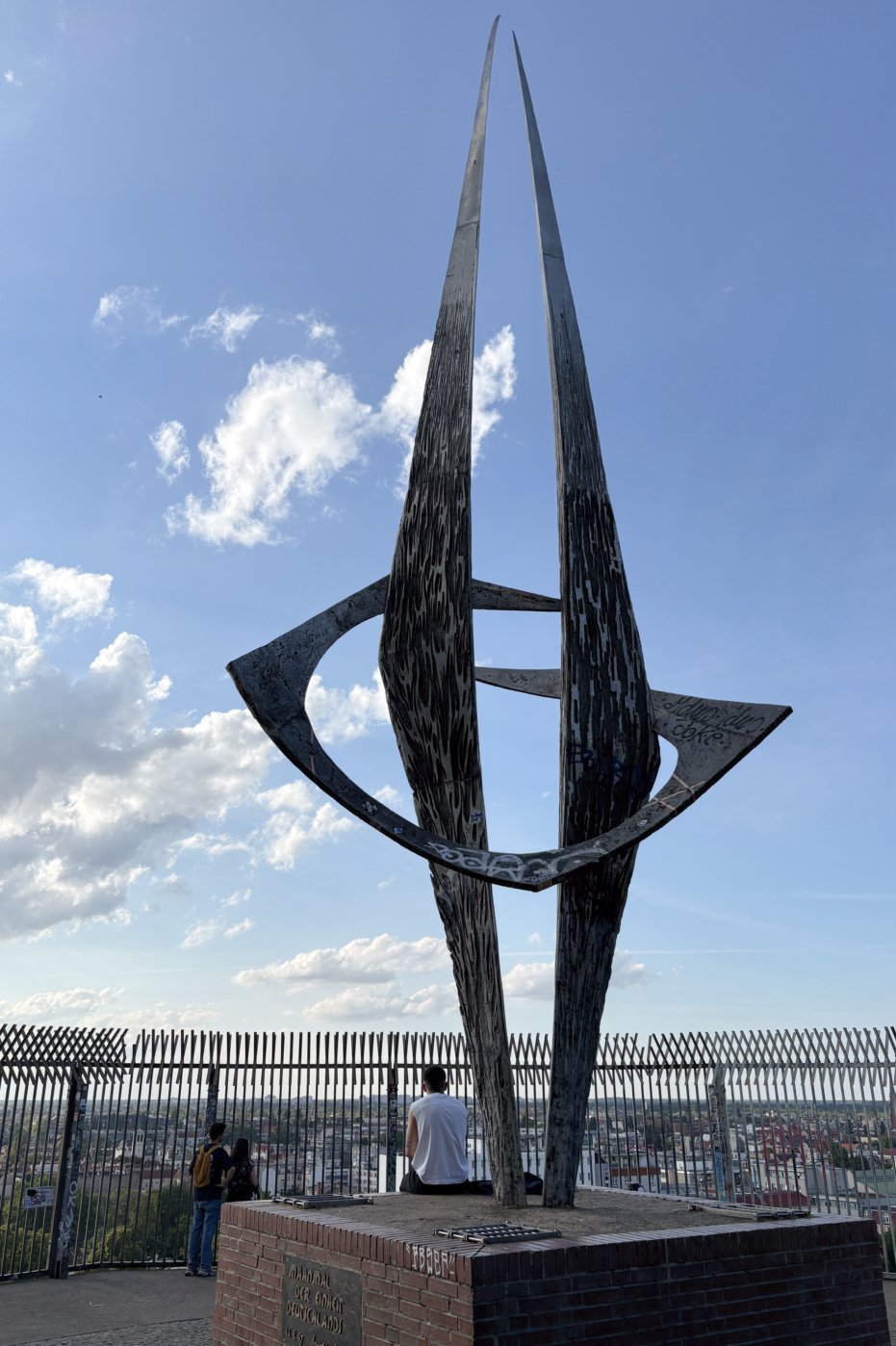
For those seeking an easier ascent, there are serpentine paths or stairs. At the summit, 84 meters up, you’ll find breath-taking views over the beautiful district of Wedding and beyond.
You’ll also find Arnold Schatz’s “Memorial to German Unity” – two aluminum spires enclosed by a band – which has been adorning the top since 1967.
Another great view of the site can be had from the Humboldtsteg, a bridge that has added a splash of red to the park since 1978 as it crosses over the S-Bahn tracks.
The peace is shattered every year on New Year’s Eve when the top of the Flakturm is taken over by trigger-happy revelers who set off fireworks and bangers with no regard for life or limb. It resembles a war scene. But that’s Silvester (as the Germans call Dec. 31), when Berliners do their best to scare the new year away.
📍 Hochstraße 5, 13357 Berlin