Schiller’s Bastion
The poet’s fortress
Berlin is rich in palaces. In addition to the numerous historically extant palaces of Charlottenburg, Tegel, Grunewald, Friedrichsfelde, Peacock Island, Bellevue, Britz, and Köpenick, and the Potsdam splendor of Sanssouci, the City Palace had to be pointlessly rebuilt as a replica using a vast amount of tax money.
However, you’d be looking for castles or fortresses in vain, for geographical reasons.
Berlin is as flat as a flounder. The defensibility of a bastion was ensured not only by high walls but also by an exposed location on at least one elevation. With some effort, the Spandau Citadel and Fort Hahneberg might pass as fortresses – the former surrounded by water and thus additionally protected, the latter situated on a small hill.
In Wedding, however, anything is possible, including a fortification named after one of the country's greatest poets and thinkers, who was reportedly not a warrior but a peaceful citizen.
When entering Schillerpark from Edinburger Straße, the white stone front of the Schiller Bastion, located north of the football pitch and about 250 meters wide, cannot be overlooked. It is bordered on the sides by two towers; drawbridges or other defensive elements are missing.
However, it is not primarily a defensive structure built to protect classical German thought, but rather the boundary of the park's garden terrace, intended for eternity and conceived by the Magdeburg landscape architect Friedrich Bauer (1872–1937), titled: 'Ode to Joy' (Freude schöner Götterfunken). The terrace is three-tiered and includes a rose garden, a chestnut grove, and the Schiller monument.
The park was not designed for strolling, but explicitly for the physical exercise of German boys, which is why changing rooms were integrated under the archways of the front wall.
Naturally, during the dark period between 1933 and 1945, both the gallery and the open space in front of it – designated as 'Schülerplatz' (student square) in the 1910 construction plan – were used as a site for political assemblies and rallies.
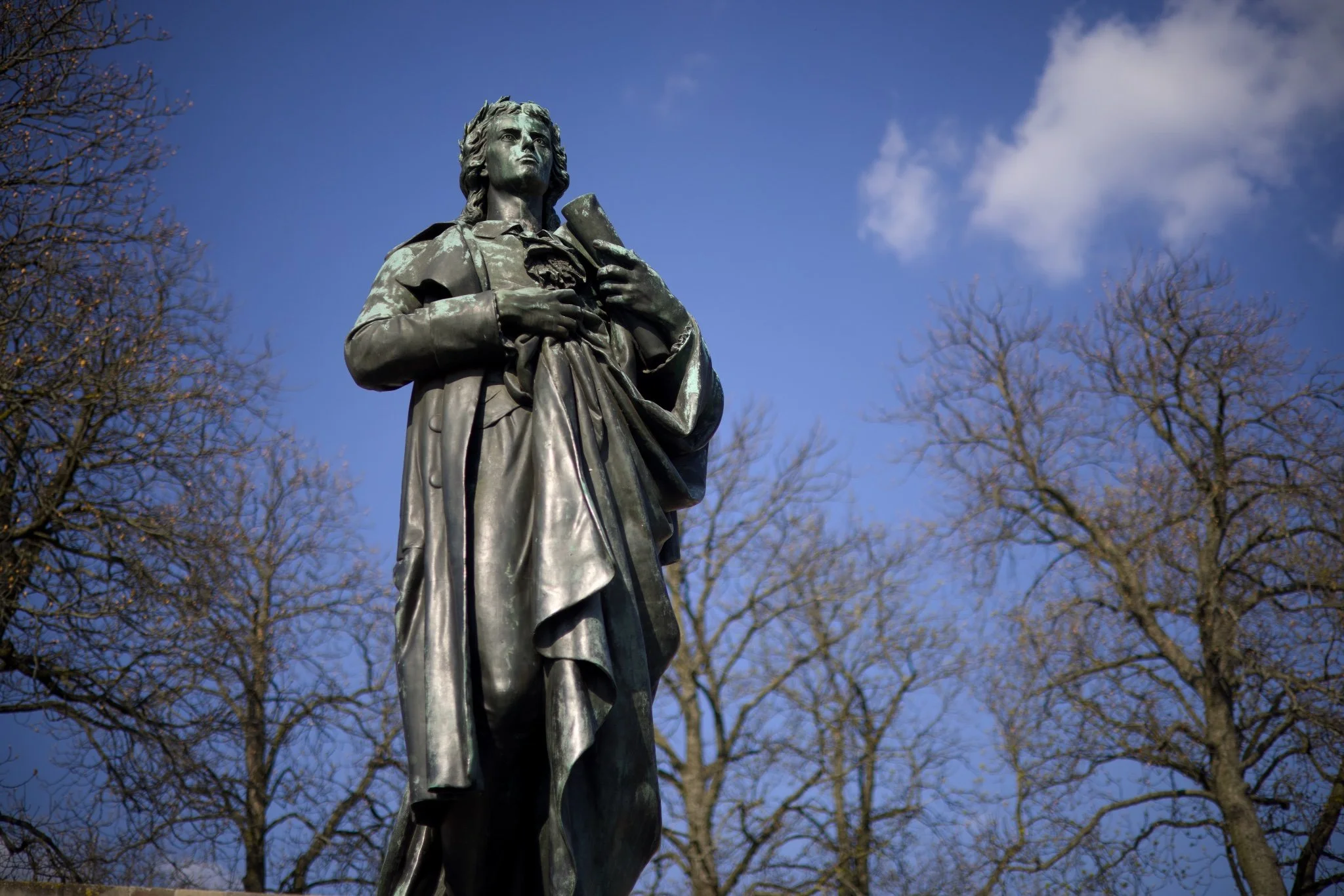
Climbing the stairs, one stands before the Schiller monument, which was erected by the Nazis in 1941 as a copy of an 1869 monument by Reinhold Begas. The bronze was obtained by melting down the monument of the Jewish politician Rathenau.
My Nazi-influenced primary school teacher, Mr. Fröhlich – a native of Wedding who loved telling war stories – still knew how to report proudly on its installation.
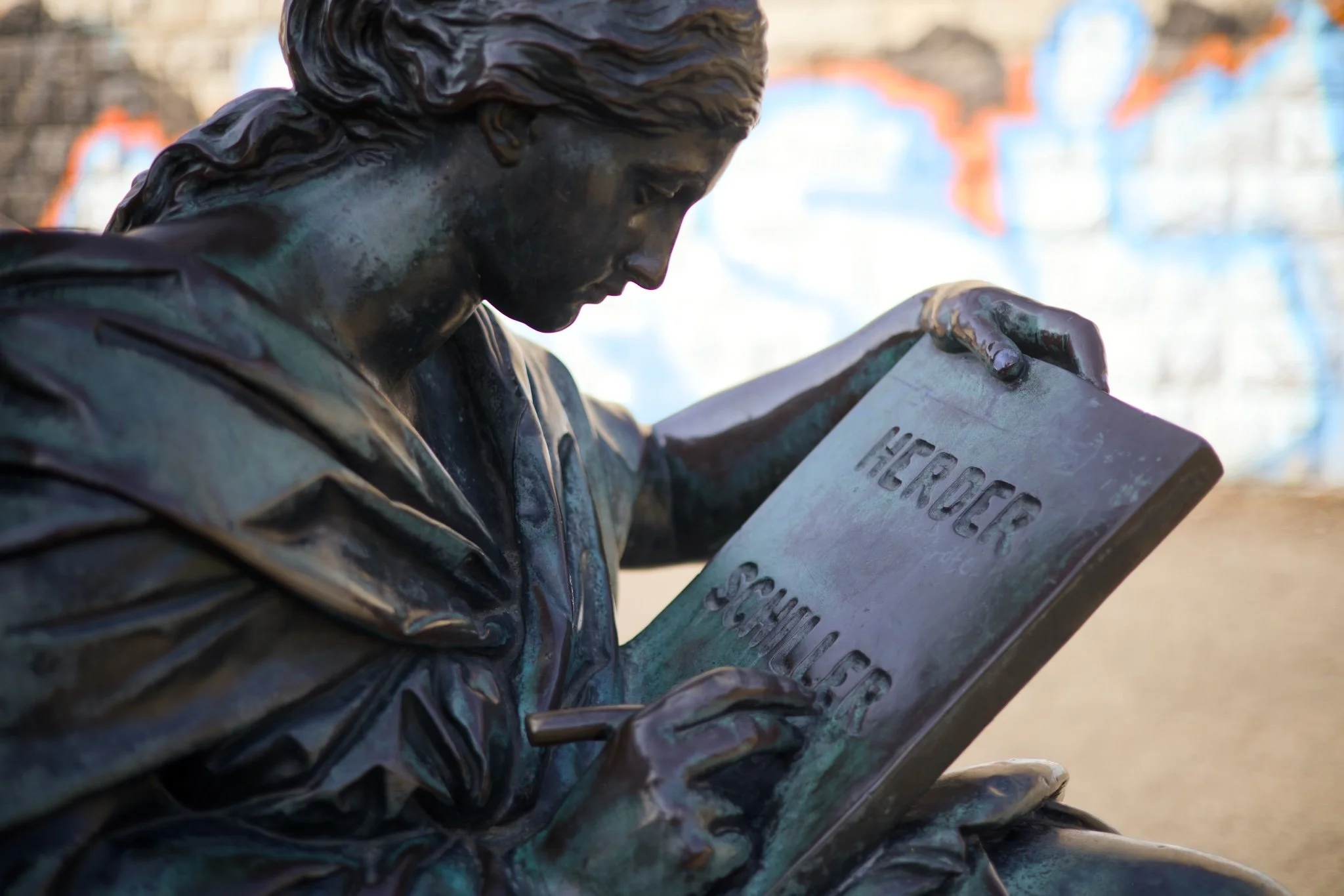
Today, however, the area is thoroughly multicultural. You can hear Swahili on the football pitch, and the inhabitants of nearby Türkenstraße ensure it’s living up to its name. Schiller’s muses wear sprayed-on graffiti makeup, which also adorns the eternal fortress. Who knows what Mr. Fröhlich would think of Schillerpark today.
📍 Edinburger Str./Ungarnstr, 13349 Berlin